
Most people never think about the dirt under their feet until something goes wrong with it. A patio that pools water every time it rains. A foundation that cracks a few winters in. A new garage floor that slopes the wrong way. Almost always, the trouble traces back to a step that happened—or didn’t happen—long before anyone poured concrete or framed a wall. That step is excavation and grading, and it’s the part of construction that Optimal Earthwork has built its whole reputation on.
So what exactly are these two things? And why do they matter so much when the finished result is supposed to be hidden underground anyway? Here’s a friendly, plain-English walk through it.
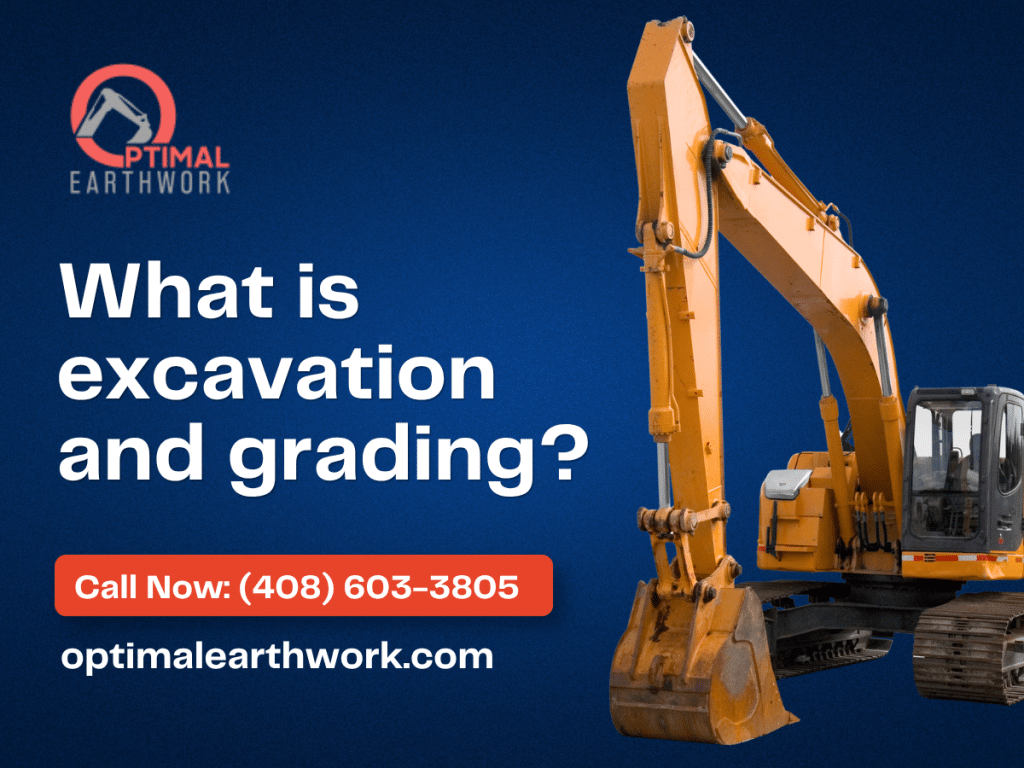
Excavation: Moving Earth With a Plan
Excavation is the process of digging into and removing soil, rock, or other material to prepare a site for whatever is coming next. That sounds simple, and on a small job it can be. But excavation is rarely just “digging a hole.” It’s digging a hole of a specific depth, width, and shape, in the right spot, while keeping the surrounding ground stable and the surrounding utilities intact.
A crew might excavate to create room for a foundation, a basement, a swimming pool, a septic system, or a network of underground pipes. They might dig trenches for water lines and electrical conduit. They might strip away the top layer of organic soil—the dark, spongy stuff full of roots and decomposed material—because that layer compresses over time and makes a terrible base to build on. Each of these jobs calls for different equipment, different techniques, and a different read on what’s actually beneath the surface.
That last part is where experience earns its keep. The team at Optimal Earthwork knows that no two sites behave the same way. One lot might be packed clay that holds water like a bathtub. Another might be sandy and prone to collapsing the moment a trench wall is exposed. A third might hide a boulder the size of a refrigerator three feet down. Good excavators don’t just power through with a bigger machine; they adjust their approach to the ground they’re working with, which protects both the project and the people doing the work.
Grading: Getting the Ground to Behave
If excavation is about removing material, grading is about shaping what’s left. Grading means leveling, sloping, and smoothing the ground so it sits at the right elevation and drains the way it’s supposed to. It’s the difference between a yard that sheds rainwater away from the house and one that funnels it straight into the basement.
There’s a common misconception that grading just means “making things flat.” In reality, a properly graded site is almost never perfectly level. It’s carefully pitched—usually a gentle slope of a few percent—so that water has somewhere to go. A driveway needs to drain to the sides. A building pad needs to direct runoff away from the structure. A backyard needs to move water toward a swale or a drain instead of letting it sit and turn into a mosquito pond.
This is why grading is sometimes described as the unsung hero of any earthwork project. When it’s done right, nobody notices. The ground just works. Water disappears the way it’s supposed to, the foundation stays dry, and the landscaping thrives. When it’s done poorly, the problems show up later and cost a fortune to fix. Optimal Earthwork treats grading as a precision task, not an afterthought, because the company has seen firsthand how much trouble a few inches in the wrong direction can cause.
How Excavation and Grading Work Together
These two processes are often spoken about in the same breath, and for good reason—they’re two halves of the same conversation. A typical earthwork sequence flows something like this.
First comes site preparation and clearing, where vegetation, debris, and that unstable topsoil get removed. Then the excavation begins, carving out the space for foundations, utilities, or whatever the design calls for. As soil gets moved around, the crew starts shaping the site, cutting down high spots and filling in low ones. This is often called “cut and fill,” and a skilled team tries to balance the two so that excess dirt from one area can be reused in another instead of being hauled away or trucked in—which saves time, money, and a lot of fuel.
Finally comes the fine grading and compaction. The surface is brought to its final elevation, smoothed, and packed down firmly so it won’t settle unevenly once weight is placed on top. By the time this stage wraps up, the site is ready for footings, slabs, asphalt, or sod, and everything underneath it has been engineered to stay put.
When a single experienced company handles the whole sequence, the work tends to go smoother. There’s no finger-pointing between crews, no gaps where one team assumed another would handle something. That continuity is one of the reasons Optimal Earthwork keeps excavation and grading under one roof.
Why It Matters More Than People Think
It’s easy to underestimate earthwork because it disappears. Once the building is up and the landscaping is in, nobody walks by and admires the grading. But the cost of getting it wrong is anything but invisible.
Improper grading is one of the leading causes of foundation damage, because water that should be flowing away instead collects against the structure and slowly works its way in. Poor compaction leads to settling, which shows up as cracked slabs, uneven floors, and sticking doors. Sloppy excavation around utilities can mean future leaks, repairs, or even safety hazards. And in many places, grading and drainage have to meet local codes and engineering specifications, so cutting corners can also mean failed inspections and stalled projects.
In other words, this is the foundation beneath the foundation. Getting it right protects everything built on top of it, often for decades. That’s a big part of why homeowners, builders, and developers care so much about who’s running the equipment.
The Equipment and Skill Behind the Work
A lot of people picture excavation as one big machine scooping dirt, and machines certainly play a starring role. Excavators, backhoes, bulldozers, skid steers, and graders each have their place, and the right tool can make a hard job look effortless. But the equipment is only as good as the operator guiding it.
Reading a grading plan, interpreting elevation markers, judging soil conditions on the fly, and keeping a slope consistent across a whole site—these are learned skills that take years to develop. An experienced operator can feel when the ground beneath the tracks is shifting and knows when to stop and reassess. This blend of heavy machinery and human judgment is what separates a clean, lasting result from a job that has to be redone. It’s the part Optimal Earthwork takes seriously, because the company understands that good earthwork is as much craft as it is horsepower.
When to Call in a Professional
Some property owners wonder whether they can rent a machine and handle small grading or digging themselves. For very minor tasks, sometimes that’s true. But the moment a project involves drainage, utilities, structural support, or local permitting, it’s worth bringing in people who do this every day.
A professional crew can spot problems before they start—an underground spring, a buried line, a soil type that won’t hold weight—and adjust the plan accordingly. They carry the right insurance, follow safety regulations around trenching and excavation, and know how to leave a site that’s genuinely ready for the next phase of construction. The peace of mind alone often justifies the call.
The Optimal Earthwork Difference
What ties all of this together is a simple idea: the ground deserves attention before anything goes on top of it. Optimal Earthwork approaches every site, large or small, with the belief that careful excavation and thoughtful grading are what make the rest of a project possible. The company isn’t interested in rushing dirt around and moving on. It’s interested in building a base that holds up.
So the next time someone admires a level driveway, a dry basement, or a backyard that drains beautifully after a storm, there’s a good chance the real credit belongs to the work nobody can see. Excavation and grading may happen first and vanish quickly, but they shape everything that comes after—and that’s exactly why they’re worth doing right.
Optimal EarthWork
3070 Garden Ave, San Jose, CA 95111
(408) 603-3805